martes, 16 de diciembre de 2014

ENGLISH GAMES FOR KIDS


Learn english with games 

Discover the importance for future employment English proficiency makes parents and teachers worry increasingly about the level of English that have children. Studying at a bilingual school, watching movies in their original version and go on vacation to the United States are some options to learn English, but a fun and inexpensive way to learn the new language is precisely English games.


http://www.mundoprimaria.com/juegos-de-ingles


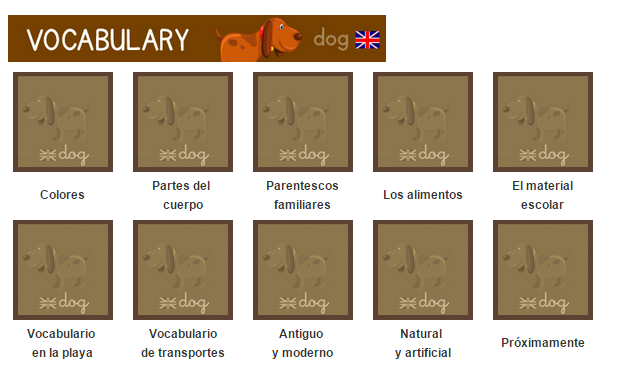
We can find:

- At first cycle activities of these type:


An exemple: 


At second cycle activities of these type:

http://www.mundoprimaria.com/juegos-de-ingles/juegos-para-aprender-ingles-3o-y-4o-primaria


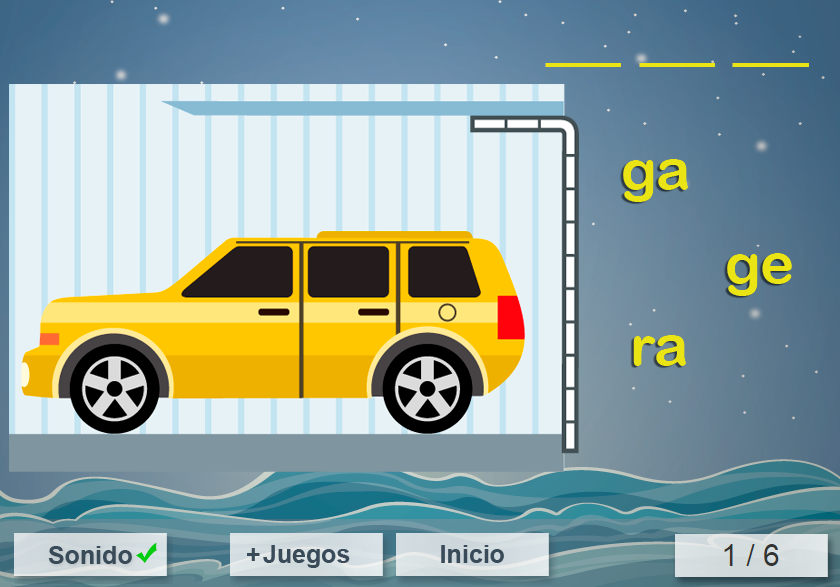
An exemple: 


At third cycle activities of these type:


An exemple: 

English may be purchased easily at early ages. English games for kids allow the child to learn without realizing it, without having to go to a grammar class without studying for an exam. Learning through play is one of the most positive ways to assimilate information such fundamental matters as English.

- How will they improve?

The English exercises that propose "Mundo Primaria" for children are very interactive and help children improve their grammar to form correct sentences in English and expand their vocabulary so that the child knows increasingly terms and can hold a conversation in their second language.

Additional sets correct English spelling of the child for very young improve his writing. Without realizing it, you will use in your day to day what you learn English with these games.

The games also improve English reading comprehension of children, which will enable small to understand others when they speak in this language and talks the most important language in the world.

Improve grammar, vocabulary, spelling and reading comprehension will allow children of Primary drastically reduce the amount of mistakes when speaking English. Primary children are in the ideal age to learn a new language, because what you learn with them for the rest of his life.


sábado, 13 de diciembre de 2014

TRADITIONAL FESTIVITIES (PART 2)


TRADITIONAL FESTIVITIES (PART 2)


- Pancake Day


Shrove Tuesday (widely known as Pancake Day) is a day in February or March, preceding Ash Wednesday(the first day of Lent), which is celebrated in many countries by consuming pancakes.
Shrove Tuesday, a moveable feast, is determined by Easter. The expression "Shrove Tuesday" comes from the word shrive, meaning "confess". Who "make a special point of self-examination, of considering what wrongs they need to repent, and what amendments of life or areas of spiritual growth they especially need to ask God's help in dealing with."
The word shrove is a form of the English word shrive, which means to obtain absolution for one's sins by way of Confession and doing penance. Thus Shrove Tuesday gets its name from the custom for Christians to be "shriven" before the start of Lent.
Pancakes are associated with the day preceding Lent because they were a way to use up rich foods such as eggs, milk, and sugar, before the fasting season of the 40 days of Lent. The liturgical fasting emphasized eating plainer food and refraining from food that would give pleasure: in many cultures, this means no meat, dairy products, or eggs.
The most famous pancake race, at Olney in Buckinghamshire, has been held since 1445. The contestants, traditionally women, carry a frying pan and race over a 415 yard course to the finishing line. The rules are strict: contestants have to toss their pancake at both the start and the finish, as well as wear an apron and a scarf. Traditionally, when men want to participate, they must dress up as a housewife (usually an apron and a bandanna). The race is followed by a church service.


We don't want the tradition is lost, and college students would do the famous race, and that day will prepare the famous pancakes.


- St Patrick's Day

Saint Patrick's Day, or the Feast of Saint Patrick ("the Day of the Festival of Patrick"), is a cultural and religious celebration occurring annually on 17 March, the death date of the most commonly-recognised patron saint of IrelandSaint Patrick.
Celebrations generally involve public parades and festivals, céilithe, and the wearing of green attire or shamrocks. Christians also attend church services, and the Lenten restrictions on eating and drinking alcohol are lifted for the day, which has encouraged and propagated the holiday's tradition of alcohol consumption.


- Easter


Easter  also called Pasch or Resurrection Sunday, is a festival and holiday celebrating the Resurrection of Jesus Christ from the dead, described in the New Testament as having occurred three days after his crucifixion by Romans at Calvary. It is the culmination of the Passion of Christ, preceded by Lent (or Great Lent), a forty-day period of fasting, prayer, and penance.
The week before Easter is called Holy Week, and it contains the days of the Easter Triduum, including Maundy Thursday (also known as Holy Thursday), commemorating the Last Supper and its preceding foot washing, as well as Good Friday, commemorating the crucifixion and death of Jesus.In western Christianity, Eastertide, the Easter Season, begins on Easter Sunday and lasts seven weeks, ending with the coming of the fiftieth day, Pentecost Sunday. In Orthodoxy, the season of Pascha begins on Pascha and ends with the coming of the fortieth day, the Feast of the Ascension.


- Carnival

Carnival (see other spellings and names) is a festive season which occurs immediately before Lent; the main events are usually during February. Carnival typically involves a public celebration or parade combining some elements of a circus, mask and public street party. People often dress up or masquerade during the celebrations, which mark an overturning of the norms of daily life.